
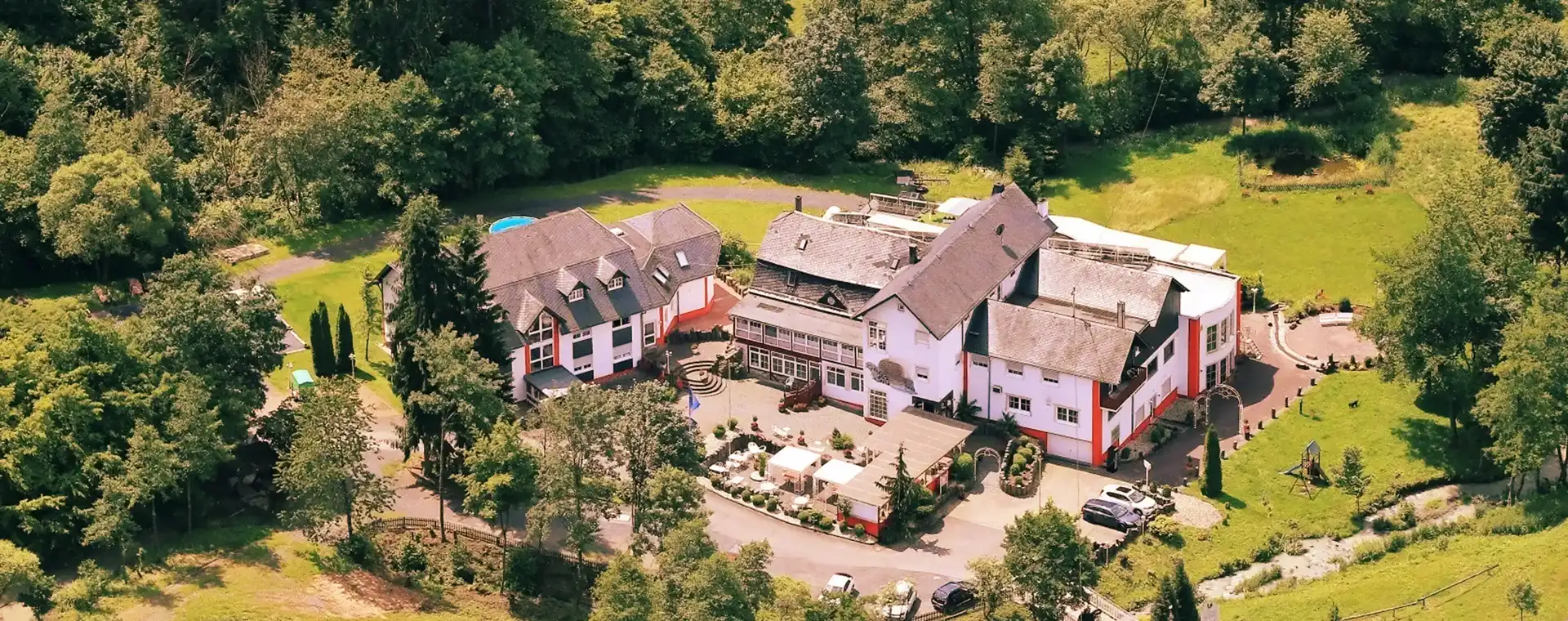
A place with a long history
Studentenmühle is a place with a long history, shaped by hospitality, encounters and continual change.
Over generations, the former watermill developed into a personally managed hotel and restaurant. What remains is a close connection to the Eisenbach Valley and the distinctive character of a place where history is still alive today.
How Studentenmühle got its name
Studentenmühle owes its name to a story passed down from the 19th century: Duke Adolf of Nassau invited students from his duchy who were studying in Göttingen to a meal at the mill.
These so-called “Freitische”, or free meals, gave rise to the name Studentenmühle. The house chronicle also links the story to the German term “Nassauer”, which is still familiar today.
Nomborn and the Eisenbach Valley
The village of Nomborn was first mentioned in 1289 as “Numburne”, although its history reaches back much further. Remains of a Celtic rampart enclosure at Bornkasten bear witness to early settlement in the region.
For centuries, the fortified church of St Kilian, with its late Gothic “Traubenmadonna” (Madonna with grapes), Baroque altar and one of the oldest bells in the Westerwald, has formed the heart of the village. The three lime trees in front of the church still stand watch over the village today.
Studentenmühle lies at the foot of Bornkasten, nestled in the peaceful Eisenbach Valley. It was once an estate belonging to the Franciscans in Hadamar and later became part of the Duchy of Nassau.
From mill to country hotel
The role of the property changed over time, while its personal character and importance as a meeting place remained.
First documented mention
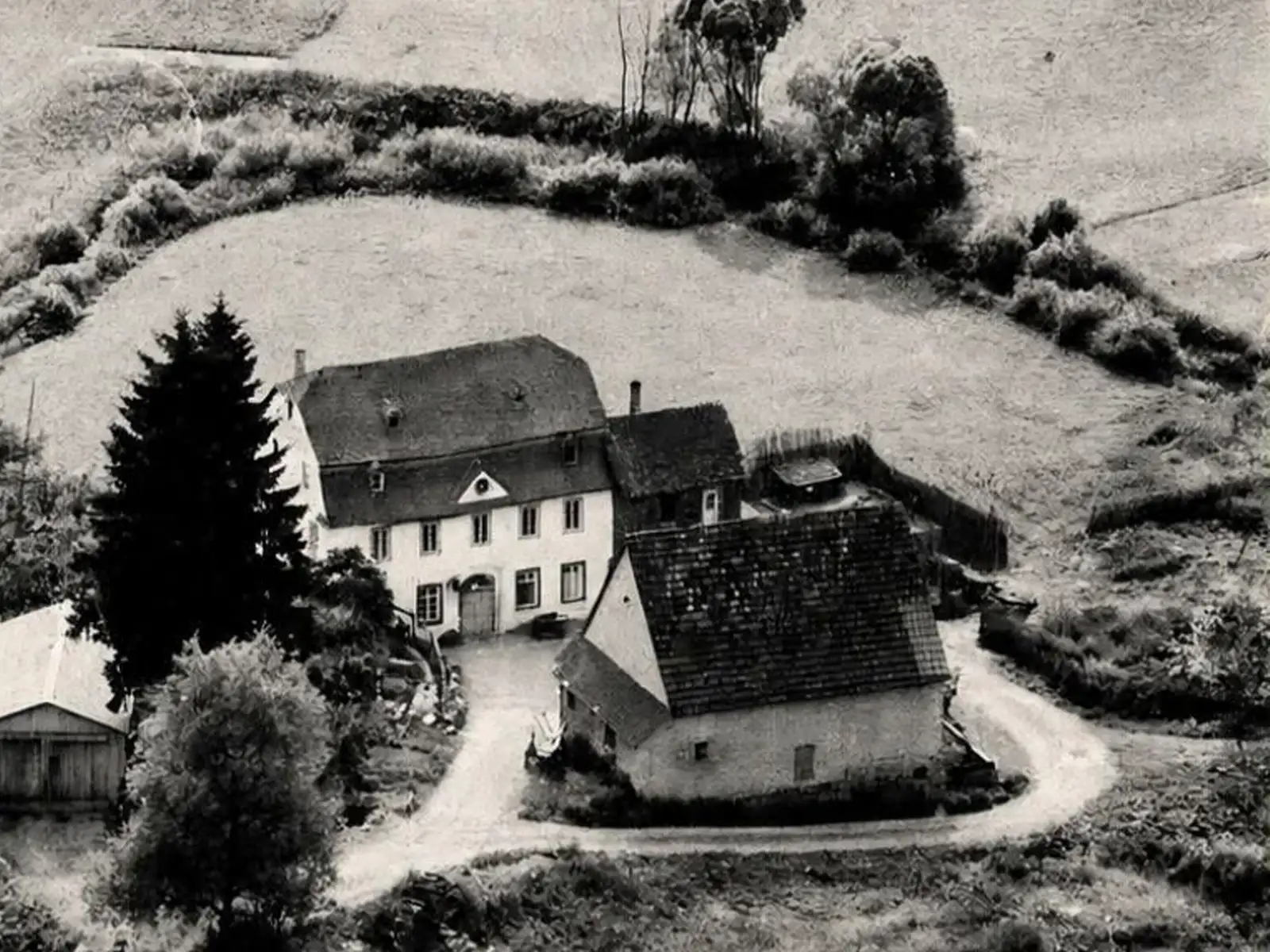
Studentenmühle is mentioned in a historical document for the first time. For many centuries, it serves as a watermill in the Eisenbach Valley.
The name Studentenmühle emerges
Duke Adolf of Nassau invites students from his duchy to a meal at the mill. This story, passed down through the years, gives Studentenmühle its name.
The beginning of the family story
The mill comes into the ownership of the Hans family. Master miller Josef Hans runs the mill until 1956.
Backup for the waterwheel
A Deutz diesel engine is acquired to take over from the waterwheel when water levels are low. The historic engine can still be found in the mill cellar today.
From working mill to inn
Industrialisation increasingly displaces the traditional milling trade. Milling comes to an end, but Studentenmühle remains full of life and becomes an inn: a place to stop, linger and meet.
The journey towards today's hotel and restaurant
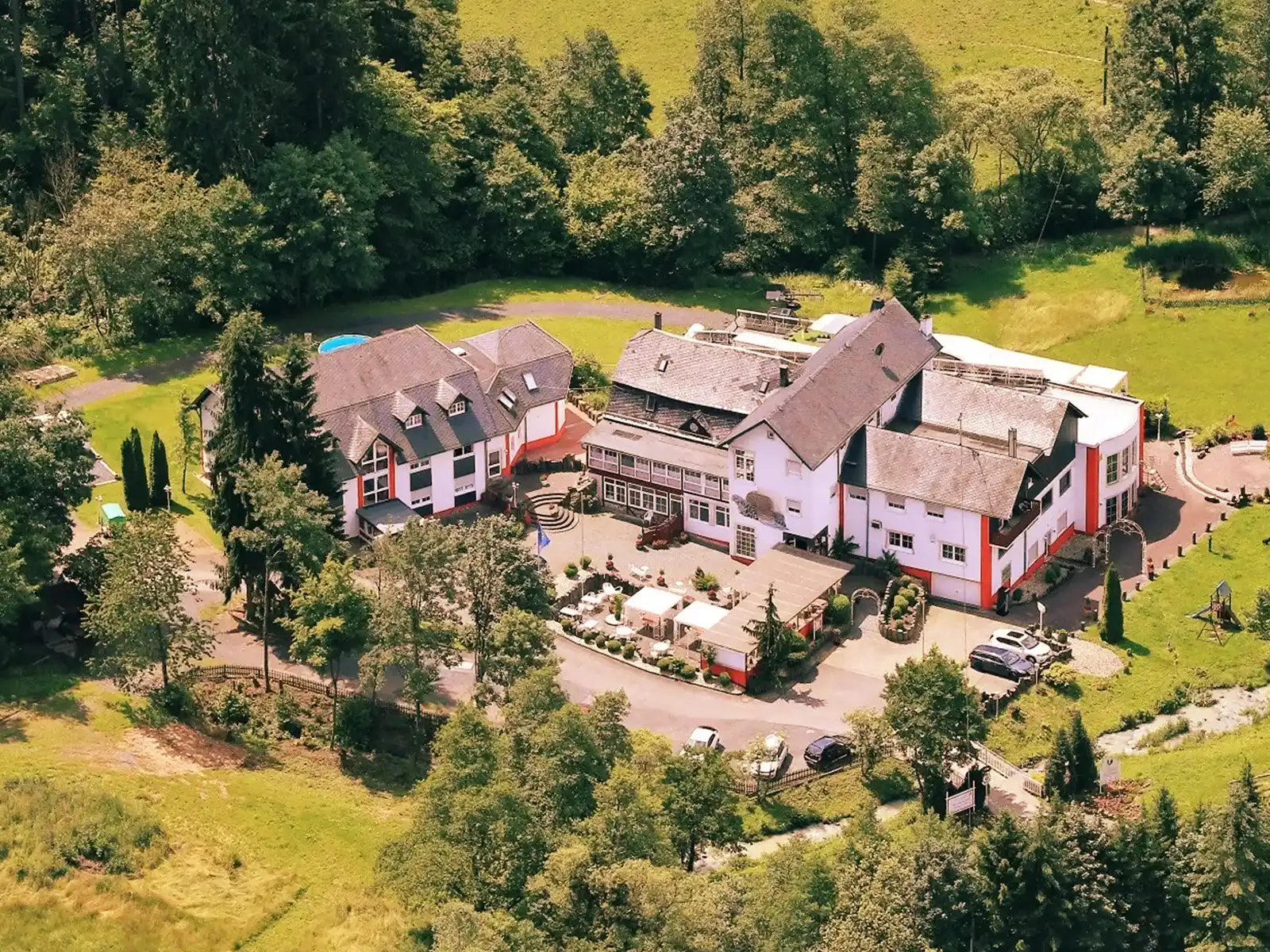
Gabriele Hans takes over Studentenmühle. Initially, she runs the business with Toni Herz, and later with her husband Joachim Görg. With dedication, perseverance and teamwork, they gradually develop the small mill into today's hotel and restaurant.
The next generation takes over
Carmen and Désirée Herz continue running Studentenmühle as the next generation. Supported by their siblings, they preserve what has been built and continue the family story with new ideas.
A family business with a future
What Gabriele Hans and Joachim Görg built together is much more than a business. Their life's work is shaped by mutual support, close personal ties and a firm belief in the future of Studentenmühle.
Today, Carmen and Désirée Herz continue this story alongside their siblings, with respect for what has grown over the years and a desire to preserve Studentenmühle as a welcoming place full of life.
The next generation is already here too: on fine days, you can see them playing around Studentenmühle. It is a lovely sign that this place not only preserves its history but also has a future.
The Deutz diesel engine from 1934 in the mill cellar is a silent witness to times gone by. It remains a reminder of change, continuity and the passage of time.
A tradition that is still alive today
Come and get to know Studentenmühle, where history, hospitality and the distinctive tranquillity of the Eisenbach Valley come together.